Mozambique Sanitation
Resilient Latrine Construction | 2020-22Challenge
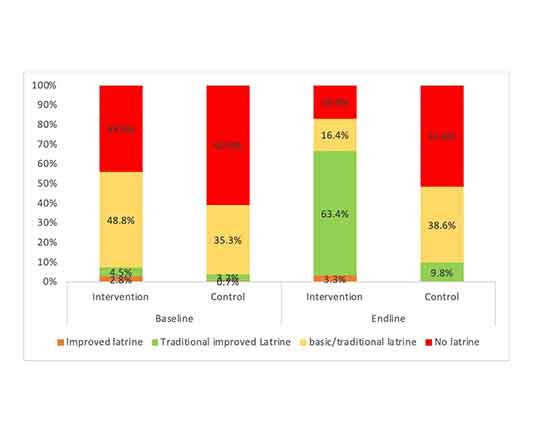
In Mozambique, villages that were declared ODF (Open Defecation Free) were slipping back to open defecation. The primary reason: basic latrines collapsed frequently due to rains and termites. How could we enable construction of resilient latrines in rural Mozambique?
Intervention design
Motivating to build resilient latrine
Building a resilient latrine results in ‘saving time and effort’ as one doesn’t have to rebuild every year. It also enhances one’s status within the community. These insights were combined in the idea of ‘Namiruku’, the wise one who thinks about the future and therefore builds a latrine that lasts. The idea was brought alive through street-theatre, testimonial films, radio spots and posters.
Helping choosing the right latrine type
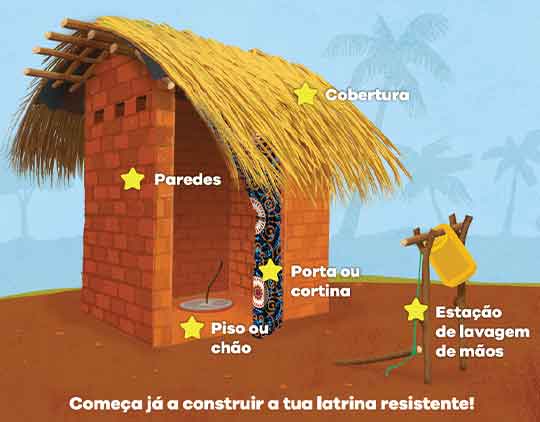
There was lack of awareness about the different aspects of a resilient latrine and different types, to be able to make the right choice for one’s context. The different aspects of the resilient latrines were presented through the concept of a ‘5-star latrine’, with each star representing a specific aspect. Right choice between different types was facilitated through community interactions with the support of standees, interaction cards and leaflets.
Making resilient latrines affordable
The cost of a resilient latrine was a barrier to its construction. The cost was brought down by skilling the target persons to build latrines on their own with the help of local materials. Learning to build a resilient latrine was facilitated through ‘Step-by-Step’ construction films and flipcharts.
Celebrating the Namirukus
Those who built the resilient latrines were celebrated in public. This was done through a flag ceremony at their home and providing certificates at a community event. On the one hand, it rewarded their positive behaviour. On the other, it inspired others to follow in their footsteps.
Outcome